5 Ways to Prepare an Emergency Fund So that Your Finances Are Safe
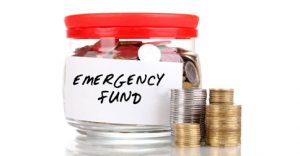
Everyone sometimes forgets the importance of being anticipatory towards various things, including finances.
Most will be anticipatory when something has happened, not long before it happened. Where are you only thinking about preparing an emergency fund after financial problems are affected by an emergency. Unfortunately, collecting money to prepare an emergency fund is not easy, it can even be said to be quite complicated, especially because of the many other expenses that must be met.
Why does everyone need to prepare an emergency fund?
Because as humans, we won't know what will happen in the future. Such as natural disasters, accidents, illness, fire and unexpected things. For this reason, it is necessary to prepare an emergency fund so that financial problems can be resolved. Therefore, everyone needs to prepare an emergency fund, here are some things that need to be prepared to create an emergency fund.
1. Understand the financial condition
Starting from knowing the monthly income and monthly expenses. This can make it easier to know cash flow so you can find out how much money should be set aside for various purposes, such as saving, investing, and preparing an emergency fund.
To make it easier to make a small notebook of income and expenses.
2. Determine the amount of the emergency fund
Make a list of things that need to be considered for an emergency fund. Such as the cost of repairing cars, motorbikes, houses, or hospital fees. Write down everything and estimate how much money is needed.
If you are still confused, you can use simple rules such as an emergency fund three times greater than your income. If you have husband and wife, then it is six times greater than your income. If you already have one child, it is twelve times the income.
3. Open a special account for emergency funds
After determining the amount of emergency funds that must be collected some time in the future, the next thing to do is prepare an emergency fund.
The purpose of opening the Aku was to be more organized in its distribution, so that the budget for the emergency fund would not be diverted to other expenses.
4. Do it gradually
Start slowly in allocating it. Most of the money owned. Do it slowly as long as it is consistent.
5. Reduce expenses
The final step is to reduce expenses.
Cut back on something that is not really that urgent, especially something that is not in the "important" category. Another way, you can find alternative products that are cheaper than usual.

Komentar
Posting Komentar